- ABOUT US
- EVENTS
- INVESTMENT FUND
- PARTNERSHIP SERVICES
- IMPACT INITIATIVES
-
SPACES
- HONG KONG
- Co-working space
- Event Space
- Prototyping Lab
- LONDON
- Co-working space
- Event Space
-
FABRICA X
- HONG KONG
- Campaign
- Online Store
- LONDON
- Exhibition
- Retail
- Subscribe
Robotics Solutions In Agrifood And Fashion Industries A Key To Solving The Population Crisis In Asia
Low birth rates coupled with an ageing population are contributing to an alarming shortage in the labour supply for the agrifood and fashion industries. To brace for the population decline, the manufacturing industries in Asia, including China, Japan and Singapore, have adopted robotics solutions to maintain productivity levels.
(Image Courtesy: DJI)
Read More
00
From Manual Labour To Automated Workforce: The Future Of Manufacturing
In the post-war baby boom era, the manufacturing industry relied on a human workforce to power mass-production, allowing the emergence of new economic miracles including the “Four Asian Tigers” (Singapore, South Korea, Taiwan and Hong Kong). Fueled by rapid industrialization, exports and a steady supply of increasingly educated individuals entering the labour pool, these countries achieved rapid economic growth in the second half of the 20th century.
However, the World Health Organisation (WHO) is now predicting that people aged over 65 will constitute 22% of the world’s population by 2050. Meanwhile, the global birth rate is expected to further decrease from 21% in the early 2000s to less than 15% by 2050, resulting in a strain on future labour supply and the appearance of a population crisis, particularly anticipated in Asia, where United Nations’ research shows that the depopulation rate is outpacing the world average.
In 2018, a report by the International Monetary Fund suggested that the adoption of technologies such as collaborative robots (Cobots) and unmanned aerial vehicles (UAVs, commonly known as drones) should be accelerated to reduce labour-intensive processes and maintain productivity.
Singapore, South Korea, and Japan were all early adopters of robotic solutions. Today, Asia not only boasts the highest robot density in the world, but is also the leading global supplier of industrial robots. According to the International Federation of Robotics, in 2020 alone, China sold over 140,000 units of industrial robots to the rest of the world, making it the largest exporter of robots.
Asia has unquestionably become a powerhouse of automation and robotics solutions, with workers having been retrained to collaborate with robots. In the following pages, we will feature a selection of Asian startups and corporates that have introduced Cobots to their businesses, enabling the agrifood and the apparels and textile industries to maintain productivity growth.
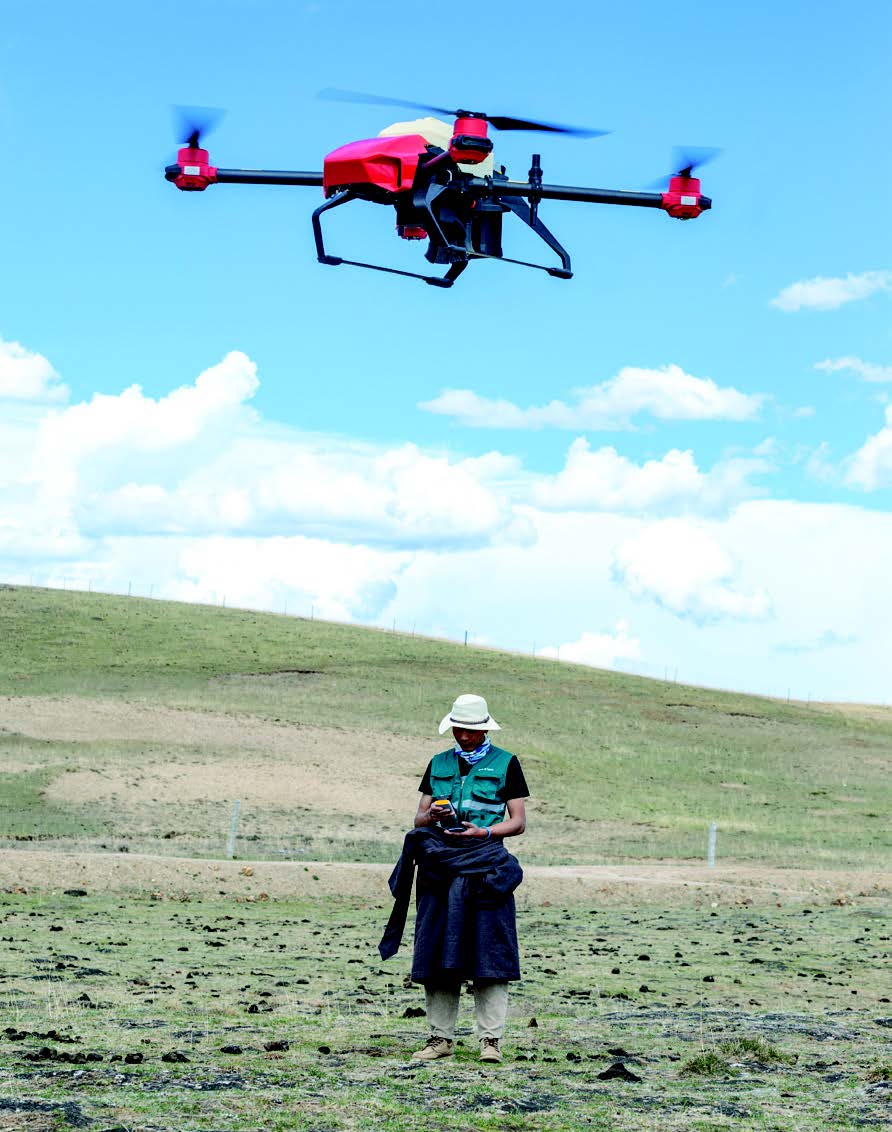
Utilizing Unmanned Aerial Vehicles In Agriculture
Founded in Shenzhen in 2006, DJI is one of the world’s most valuable UAV companies. A report published by Drone Industry Insights in April 2021 reveals that the company has increased its revenue by 27.5% year-over-year to 2.9 billion USD in 2020, making up 38% of the global UAV market.
Besides its consumers and enterprise solutions, DJI has also launched a range of drones to help the agriculture industry in 2018, enabling the farming sector to automate its on-site operations. As Environment, Social and Governance (ESG) becomes a crucial part of every business, DJI has created several programs using drones to support lower-income communities in the Philippines and Vietnam to empower local farmers to increase yield by adopting automation solutions.
(Image Courtesy: XAG)
Leveraging the fully-fledged drone ecosystem in China, an increasing number of entrepreneurs have chosen Southern China to establish their drone businesses. Based in Guangzhou, XAG is an agriculture hardware company that develops robots, drones and unmanned vehicles, to help the agriculture industry increase efficiency and productivity.
The company has also collaborated with an NGO in Australia to tackle the problem of invasive plant species in the Snowy Monaro region. By using its precise mapping technology, farmers can minimize the amount of herbicides to lower the level of contamination in soil and water.
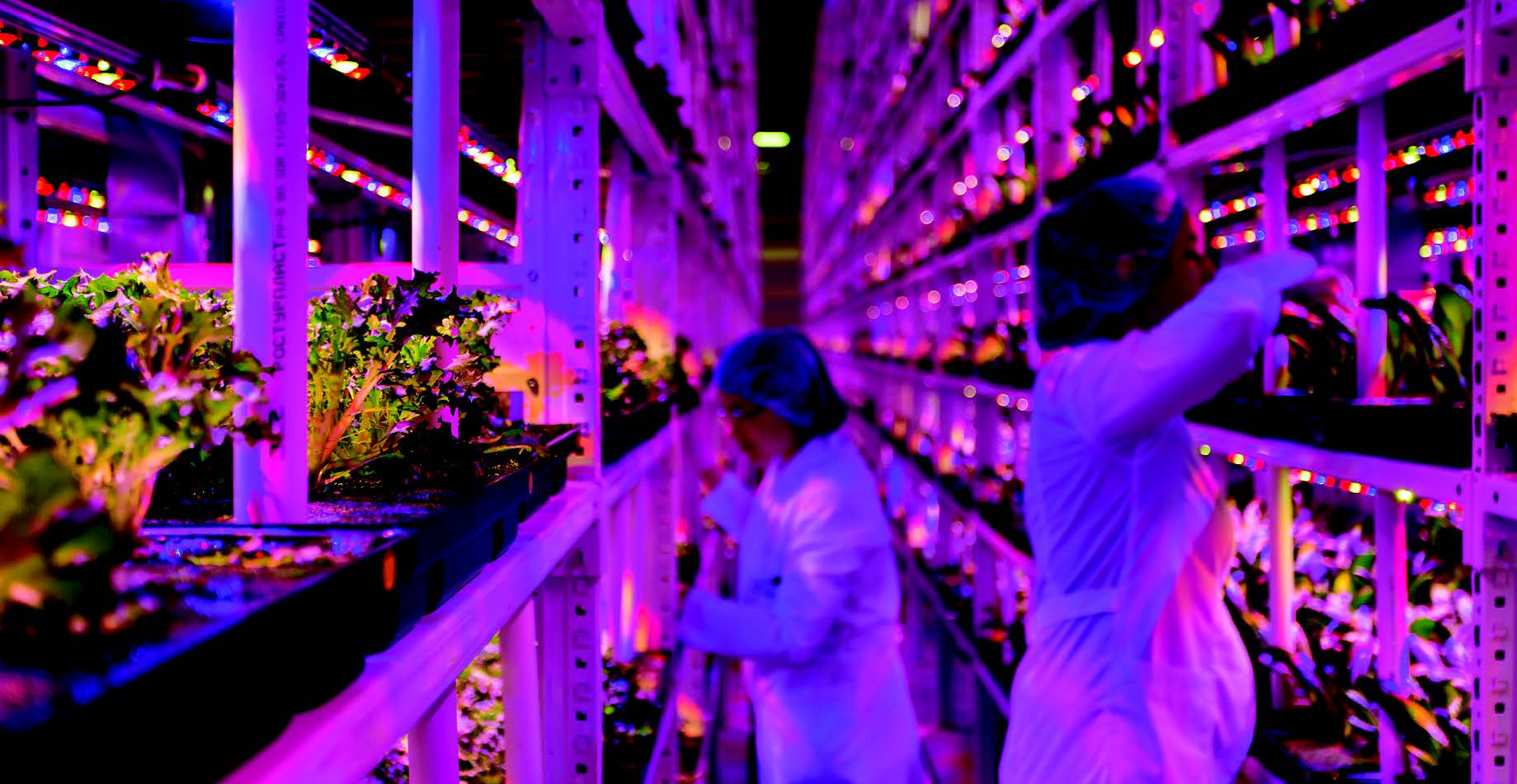
Luscious peaches, fragrant strawberries, and velvety kabocha pumpkins are only a few of the staple food products from Japan – with the Japanese agriculture industry exporting over 8 billion USD worth of products every year. However, the country’s decreasing and ageing population poses a threat to this labour-intensive industry.
To overcome this challenge, Spread, a Japanese food producer, has opened the world’s first automated indoor farm in 2017. From watering, trimming, and harvesting, to controlling the conditions of the environment, the farm is entirely operated by robots, producing 21,000 heads of lettuce every day. The company has also announced its first indoor strawberry farm in April 2021, growing pesticide-free strawberries using similar technologies.
In Singapore, the country with the world’s highest robot density, automation has helped Seng Choong, a family-owned egg farm founded in the 1980’s, transform into a high-tech business yielding 600,000 fresh eggs every day. Most operations of the farm, such as feeding poultry, quality control, egg pasteurization and pelleting optimization, are performed by Cobots developed by the Swiss company ABB, allowing the farm to release human workers from labour-intensive tasks and increase production capacity by 30%.
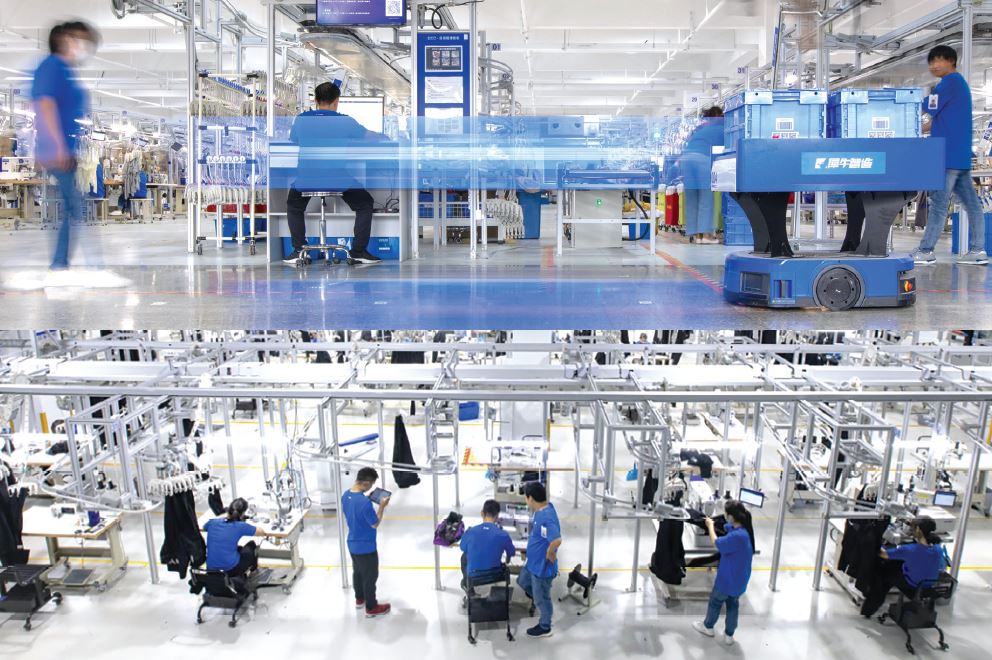
McKinsey released a report in 2018 suggesting that automation solutions are vital to bringing about nearshore on-demand manufacturing. Not only can they help the garment industry reduce labour-intensive tasks, but they also allow it to become more sustainable by consuming less energy, water, and chemicals.
Robots are now being widely used by the industry to cut fabrics and apply abrasives. For example, Levi’s has successfully reduced the time of laser-engraving of a pair of jeans from 30 minutes to just 90 seconds by replacing human workers with automation.
With that said, most highly labour-intensive steps like sewing and warehousing are still done by human workers, McKinsey’s report notes. To solve this problem, Uniqlo, one of the largest retailers worldwide, producing 1.3 billion items a year, has announced a pilot project with the Japanese robotics startup Mujin to fully automate one of the production lines in its facility in Tokyo. Mujin even offers solutions to tackle packing soft materials, one of the major challenges of using robots in a warehouse that leads most e-commerce companies to continue hiring ‘pickers’ to perform fulfilment tasks: it has developed a robot with a suction cuplike arm that can effortlessly transfer t-shirts – or a piece of paper from a printer – to a carton box.
Fashion and accessories account for 24% of the business of the Chinese e-commerce giant Alibaba, which owns, among others, e-commerce platforms TMall and Taobao. To minimize excess inventory and reduce fashion waste, the company has opened a smart factory in Hangzhou in 2020 using artificial intelligence to predict market trends and demand, whilst all intralogistics are performed by Automatic Guided Vehicles (AGVs), which transport materials and products with tags connected to a cloud-based system across the facility. The hyperconnected smart factory enables SMEs listed on their platforms to control production cost by producing small batches of items, with a lead time of just 7 working days.